


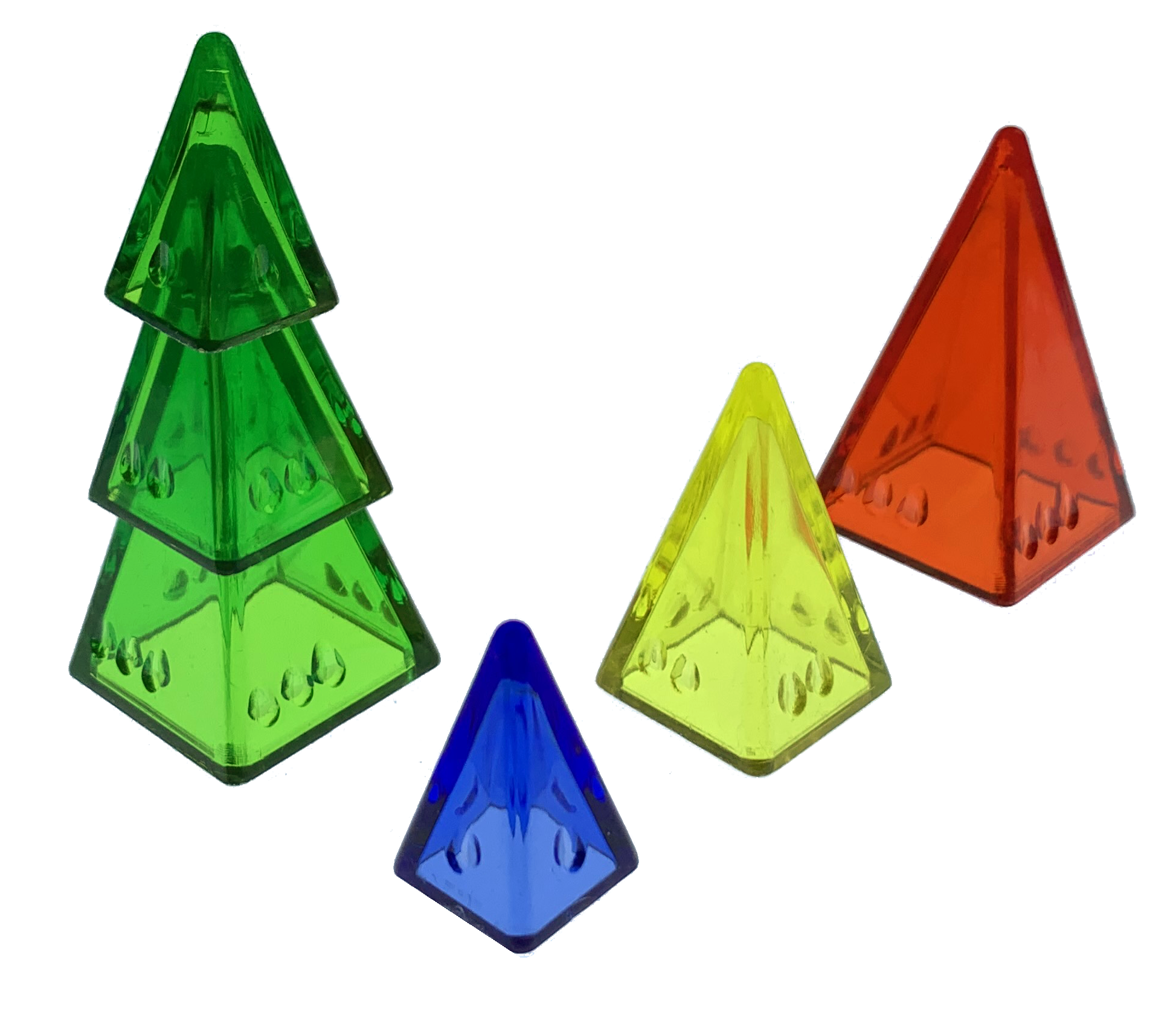
What are Looney Pyramids?
Looney Pyramids are multi-purpose game pieces used for playing numerous different abstract strategy tabletop games.


Equipment: First you will need some pyramids. The pyramids have been sold in a variety of different packaging styles over the years. Currently, the core product is Pyramid Arcade, which contains 22 complete games and a full-spectrum set of 90 pyramids. A new line of smaller sets focused on specific games was released in fall 2020, collectively known as the Pyramid Quartet games.

 Rules: There are now hundreds of different pyramid games being played by the community of pyramid fans, and more are being invented all the time. Whichever game you start with is always just the beginning... the system invites you to learn other games. This page provides a jumping-off place for finding to the rules to your next favorite pyramid game. See also the Meta Rules of pyramid games for high-level game concepts.

History: The pyramids have a long, rich history (some of which is fictional). The pyramids started as pieces for a complex and mostly forgotten game called Icehouse, but in 1993, when Andy challenged himself and his friends to invent other games for the pyramids, they discovered just how versatile these game pieces really are.

Community: There’s an active fanbase for players of pyramid games, who are known as Starship Captains. To gain this title, you need to learn at least ten games, then make a list of your favorites, ranked by desire to play.
How can I buy Looney Pyramids?

If you are new to the system, you have two options for getting started.

Find a game store or buy it in our webstore
